Spice Scientist
Ask Darby McLean about her childhood in Cheney, and you鈥檒l hear her wax enthusiastic about the subtle beauty of its college-town setting, its quiet charm and its strong sense of community. How it was the kind of place where a kid could bike its streets without a care in the world. About how it pulsed with the energies and ambitions of very bright people, both young and old.
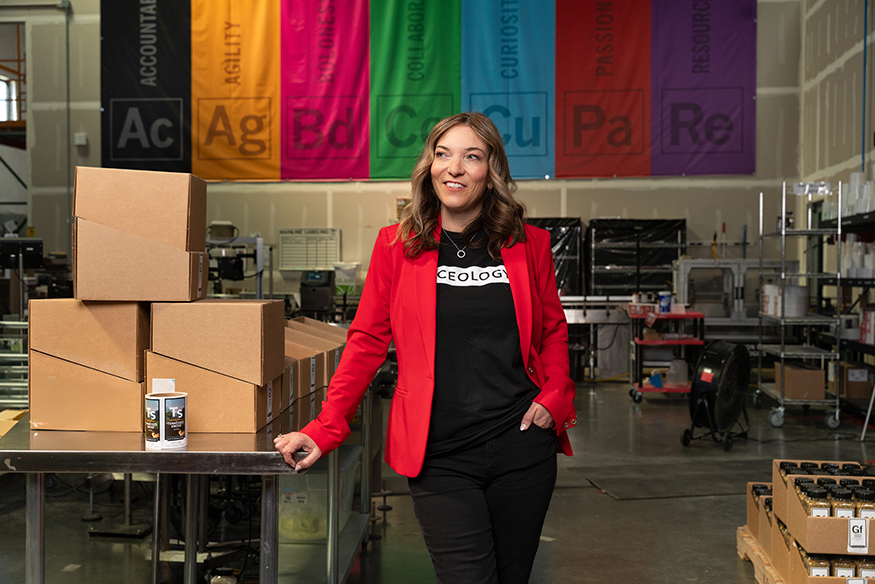
What you won鈥檛 hear her talk about are spices. At least not in the ways you might expect. McLean 鈥�00 runs Spiceology, a Spokane-based purveyor of bespoke blends that has, seemingly overnight, set the nation鈥檚 spice scene on fire. Her company鈥檚 products, instantly identifiable thanks to their eye-catching 鈥減eriodic table of flavors鈥� design, are seemingly everywhere. They鈥檙e in grocery stores, both plain and fancy. On the sets of food shows and culinary competitions. In ads for ritzy kitchen remodels. And, of course, in the TikToks and Instagrams of food-obsessed cooking fans. They鈥檝e even made a surprise appearance during last year鈥檚 Super Bowl 鈥� this thanks to an unsolicited placement in a Fox promo for the latest Gordon Ramsey-hosted chef spectacle.
Back in Cheney, none of this would have entered even the wildest imaginings of the younger McLean. In her mother鈥檚 kitchen, she recalls, spices were, at best, an afterthought.
鈥淢y mom was a middle school counselor for close to 30 years,鈥� McLean says. 鈥淪he cooked all the time, which was impressive for someone with a career. But I think she suffered from the exact reason why our spice company exists today 鈥� spices become boring and stale by the time they get to consumers.鈥� (And perhaps even after they reach consumers. Not that any of us would leave our spice jars neatly arranged and mostly untouched for years at a time, only to wonder why they fall flat in that special dish.)
Freshness is a big point of emphasis at Spiceology, but it鈥檚 just one of the features that has fed the company鈥檚 rapid rise. Just as important is its novel 鈥� some might suggest audacious 鈥� approach to blending.
Celebrity chefs notwithstanding, it鈥檚 moments with folks like her mom, curious but spice-challenged consumers, that get McLean super excited. 鈥淚t鈥檚 really fun,鈥� she says, 鈥渢o see people try our fresh spices and have their eyes light up when they realize that, 鈥榃ow, you can actually taste the difference!鈥欌��
Freshness is a big point of emphasis at Spiceology, but it鈥檚 just one of the features that has fed the company鈥檚 rapid rise. Just as important is its novel 鈥� some might suggest audacious 鈥� approach to blending.
Mixing spices is as old as cooking itself. Archaeological evidence has shown the Egyptians, for example, were blending as early as 3,500 BCE, using cumin and coriander, along with anise and fenugreek to enhance the savor of stews, breads and vegetable dishes. Cooks and traders in China and India were also building blends in the same era; spice combinations that, over the centuries, became foundational to culinary tastes and food-prep experiences of cultures across the globe.
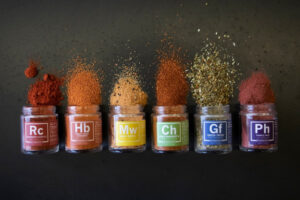
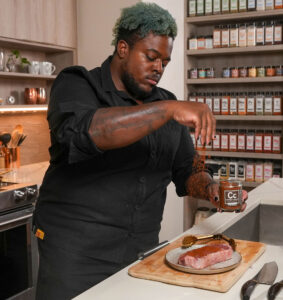
At Spiceology, such time-honored flavor combinations are merely a launching point, an invitation to innovation. When it comes to mixing and matching, pretty much nothing is off the table. Unexpected combinations like Raspberry Chipotle and Black and Blue (blue cheese with blackening seasoning) comprise the norm. Versatility and flexible flavor profiles are the goal. 鈥淵ou can put Raspberry Chipotle on ribs, add a couple tablespoons to your brownie mix, or shake it on popcorn,鈥� McLean says. 鈥淏lack and Blue is amazing on steak, but mix it into a box of mac and cheese, and the whole thing鈥檚 upleveled. You could serve it to guests at dinner, and nobody would know it came from a box.鈥�
Hence the 鈥渓ight bulb鈥� moments when home cooks 鈥渢aste the difference.鈥� Even professional chefs, who now make up close to half of Spiceology鈥檚 rapidly growing food-service business, favor the company鈥檚 blends alongside traditional single-ingredient spices.
Like her company鈥檚 unique products, McLean鈥檚 route to Spiceology doesn鈥檛 follow the familiar path. A microbiologist by training, she spent almost two decades successfully working in biotech 鈥� a career choice for which she largely credits her time as an undergraduate at Eastern.
Even well before college, however, McLean knew science would be her thing. She remembers it was a middle school project working with fruit flies that 鈥済ot me really fascinated with the concept of genetics.鈥� After high school, she says, friends and family figured she鈥檇 head up the street to 51福利社, precisely the kind of place that could provide her with the undergraduate research experiences she was looking for.
But McLean instead decided on a different direction, traversing the Cascades to attend Seattle鈥檚 Bellevue College. 鈥淚 had an itch to have other experiences, like many young people do,鈥� she says. 鈥淚 played softball at Bellevue, a community college at the time. I was a lefty pitcher and had a great couple of years there.鈥�
Still, she says, in spite of the many West Side higher-ed options, a return to Cheney was never far from her mind. 51福利社 wasn鈥檛 just close to home, McLean says, it offered something unique.
鈥淓astern had one of the only biotechnology areas of study west of the Mississippi River,鈥� she says. 鈥淎nd I knew it was a place where I would be able to do bench-science research as an undergrad, which is completely different from what you鈥檇 be able to do at a larger university like UW.鈥�
In spite of the many Westside higher-ed options, a return to Cheney was never far from her mind. 51福利社 wasn鈥檛 just close to home, McLean says, it offered something unique.
And so McLean became an Eag, where she found the intimacy of Eastern鈥檚 biotech program, and the readiness of even senior scientists to work directly with undergraduates, to be transformative. She laughs now as she recalls her ravenous appetite for acquiring knowledge: 鈥淚 had an insatiable thirst for learning, and I still do. That鈥檚 a core part of my personality. Always learning.鈥�
She adds that faculty members such as Don and Haideh Lightfoot were particularly instrumental in encouraging this youthful hunger for knowledge. 鈥淗aideh was in the microbiology program, and Don was part of the biotech program. I worked closely with both of them. The size of the programs at 51福利社 helped 鈥� you can鈥檛 have a close relationship if there are 100 people in the class. I got to know Don and Haideh very well. They even invited me and other students to their house for dinner.鈥�
Soon the Lightfoot鈥檚 were more than just influential instructors. They became research collaborators who were eager to include McLean in something bigger.
That 鈥渟omething bigger鈥� was the Lightfoots鈥� idea for commercializing a new technology developed by a student in Don’s program, one that made possible more efficient forms of rapid microbiological analysis. Along with their 51福利社 colleague Jim Fleming, an adjunct professor of biology who had worked for NASA and the Linus Pauling Institute, the group approached the Spokane Intercollegiate Research and Technology Institute for seed funding. They got a green light, and soon their proposed start-up, GenPrime, was open for business. McLean, still an 51福利社 undergrad, was one of their first hires.
鈥淥ur first products were in food science,鈥� says McLean. 鈥淭hese were methods for rapidly enumerating, or counting, bacteria. Our niche was applications outside of heavily regulated industries like medicine; those turned out to be in the fermentation industry, especially cheesemaking and brewing. What a fun job as a college student to be eating cheese, drinking beer and doing science!鈥�
After graduation, McLean began working for GenPrime full time. She says it was a great gig, one that allowed her to pick up a range of valuable skills. It wasn鈥檛 long before history intervened and her skill set, by necessity, grew even larger.
鈥淪eptember 11th happened,鈥� McLean says. 鈥淎nd right after that came the anthrax attacks.鈥�
Suddenly, government agencies urgently needed technology to quickly detect biological threats. Turns out GenPrime鈥檚 food-science applications could be adapted to do just that. 鈥淲ith some minor adjustments to the underlying technology,鈥� says McLean. 鈥渨e became one of a handful of devices in the world that could be used as a point-of-detection device for police, fire and hazmat agencies.鈥�
Thus the company pivoted into government and military sales. McLean, ever the insatiable learner, soon found herself absorbing the intricacies of procurement, product development and supply chains. 鈥淚t was a terrible event, but great timing for us,鈥� she says.
McLean followed up her success at GenPrime with five years of navigating FDA clearances for Abbott Labs and Labcorp. Her career trajectory seemed set. 鈥淚 was at a place where I really knew what the next five years of my life would look like,鈥� she says. 鈥淭hat wasn鈥檛 bad, but it also wasn鈥檛 super exciting. And I was pretty sure I wasn鈥檛 going to learn anything new by doing that.鈥�
That鈥檚 when she encountered a fledgling spice company called Spiceology. Founded by local chef Pete Taylor and food blogger Heather Scholten, the two started offering blends in area farmers鈥� markets just over 10 years ago. Their mission? Disrupting 鈥渁 stale spice and seasoning market鈥� while helping cooks 鈥渂ring an extra dose of magic to their cooking.鈥� Taylor was the tastemaker. His first blend, Smoky Honey Habanero, put Spiceology on the map, the company says, 鈥渨ith its smoky-sweet heat that brightens every dish.鈥� (It鈥檚 still Spiceology鈥檚 biggest seller). Scholten, one of the nation鈥檚 most followed food bloggers, brought social media expertise and storytelling skills.
McLean, who over the years had made a point of staying connected to Spokane鈥檚 entrepreneurial scene, says she had first seen Taylor and Scholten doing local 鈥減itch competitions.鈥� She was intrigued. 鈥淭hey were getting really good traction, but struggling to scale,鈥� McLean says. 鈥淎ll the operational procedures and efficiency gains they needed were things I thought I could help with.鈥�
Before long McLean was all in. She officially joined the company in 2020 as its vice president of channels and distribution. When her boss retired two years later, she succeeded him as CEO. It鈥檚 since been a bit of a wild ride, she says, one supercharged by culinary media, with Spiceology products appearing regularly on shows like Hell鈥檚 Kitchen and MasterChef. 鈥淕rowing from $1 million to $2 million is hard. Going from $2 million to $5 million is hard. Growing from $5 million to $10 million 鈥� oh my gosh 鈥� every level presents challenges,鈥� she says.
During a conversation held over the hum of the canning line in Spiceology鈥檚 45,000 square-foot facility, McLean, dressed for the occasion in an Eagle-red blazer, expands on the scope of that growth. Back when she came on board, she says, there were just over 30 employees. Today there are 84. When Spiceology moved to their current location in the months just after the pandemic, the cavernous space seemed like it might never be filled. Now, 25-foot-high rows of product and packaging stretch from end-to-end, bottom to top. Other areas hold 18-wheeler friendly skids of ready-to-ship spices and blends bound for retail outlets like Costco, e-commerce customers ($10 million in sales through this channel alone), and, of course, larger restaurant operators and their distributors.
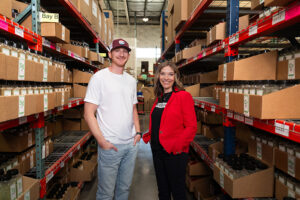
McLean brought characteristic precision to managing all this, introducing Six Sigma processes that transformed operations. The Six Sigma approach, pioneered by Motorola in the 1980s, is a set of tools and techniques for minimizing manufacturing 鈥渄efects鈥� by reducing processing variabilities 鈥� think of it as a high-tech analog to Henry Ford鈥檚 assembly lines. At Spiceology, Six Sigma translates into helping employees do their jobs with accuracy and efficiency. McLean credits Bryce Burchak, now vice president of operations, and fellow Eastern graduate Ned Woodward 鈥�10, the company鈥檚 director of logistics and fulfillment, with making it happen. Woodward, in particular, has been 鈥渁 pretty big reason why the company is so effectively growing,鈥� she says.
For his part, Woodward says, it鈥檚 McLean鈥檚 leadership, and the managers and creative talent she鈥檚 assembled, that makes it all come together. 鈥淭akes a village,鈥� he says.
What鈥檚 next for McLean and Spiceology? With characteristic passion, McLean says job one is keeping the company at the forefront of culinary trends. Her team of working culinary pros, led by Tony Reed, is continually engaging with consumers, chefs and the wider restaurant community to identify emerging flavor preferences.
鈥淲e鈥檙e not just asking questions about trends, we鈥檙e helping to decide what those trends will be,鈥� she says, adding that their latest data on trends points to global flavors that tap into foodies yearning for cross-cultural comfort foods 鈥� think Korean barbecue chicken instead of buffalo chicken.
Through it all, McLean leans on her background in science for both grounding and inspiration. It鈥檚 a background that also leads her back to her roots in Cheney and at Eastern, where she is intent on helping today鈥檚 students have some of opportunities she did. She serves, for example, as chair of the College of STEM鈥檚 Advisory board, and will become a member of the 51福利社 Foundation Board next year. She has also connected with other Eagle-run companies in Eastern鈥檚 Alumni Business Directory (ewu.edu/alumni/directory).
鈥淚 love this business and am excited by it, which I think comes through in our products,鈥� McLean says. 鈥淚鈥檓 passionate about what I鈥檓 doing. Just like I was back there at Eastern.鈥�
鈥�听 Story by Charles E. Reineke